Android Event Capture App
Overview
The event capture Android app allows you capture, modify and list events. The event capture app works with event-based programs in DHIS2, which handles anonymous events not linked to registered entities. These programs are suitable for handling scenarios such as facility surveys, hospital registry summaries and training events. However the app is not tied to any specific domain and can potentially be utilized for any scenario of event-based information.
The event capture app allows you to capture events offline, i.e. without Internet connectivity. The app will automatically synchronize events with the online DHIS2 server automatically when connectivity is present. This makes the app suitable for environments where Internet connectivity is scarce or unstable.
Installing and logging in
The event capture add can be found on Google Play under the name "Event Capture for DHIS 2".
You can download the APK file directly from the GitHub release page.
Click on the app to open it after the installation is done. This will bring up the login screen.
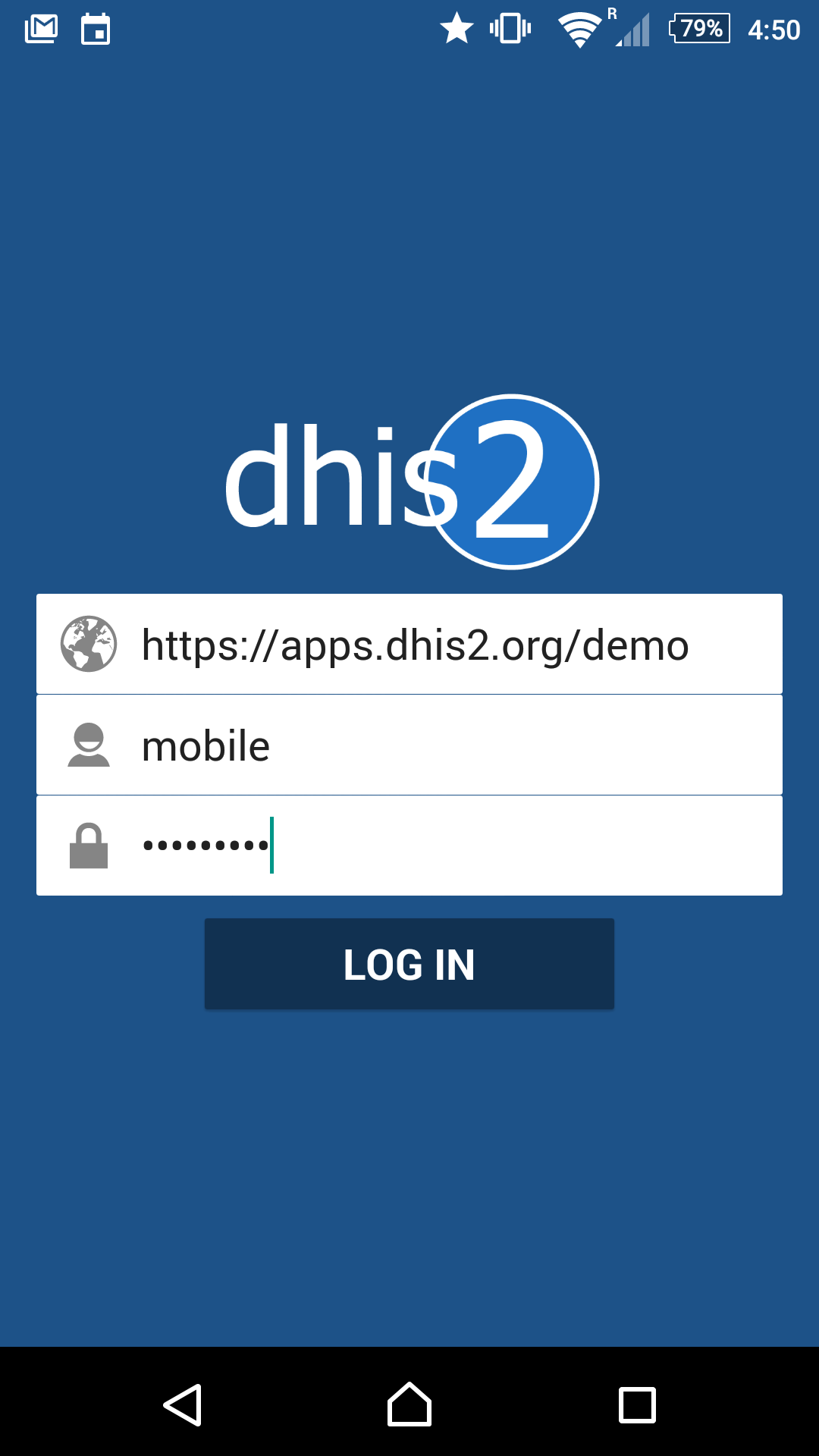
In the URL field, enter the full URL to the DHIS2 instance (server) for which you want to capture and manage events for. Be careful to enter the http:// or https:// part of the URL as well. In the username and password field, enter the username and password for your account at the given DHIS2 instance. Note that you can use this login on the online DHIS2 server as well, i.e. you will be using the same account as you will use when logging into DHIS2 using a Web browser. After logging in the first time, the app will download meta-data from the online instance. This could take a few minutes so please be patient.
Viewing events
The main screen will show an overview of events, as well as links to creating new ones. Start by selecting organisation unit and program from the selectors at the upper part of the screen.
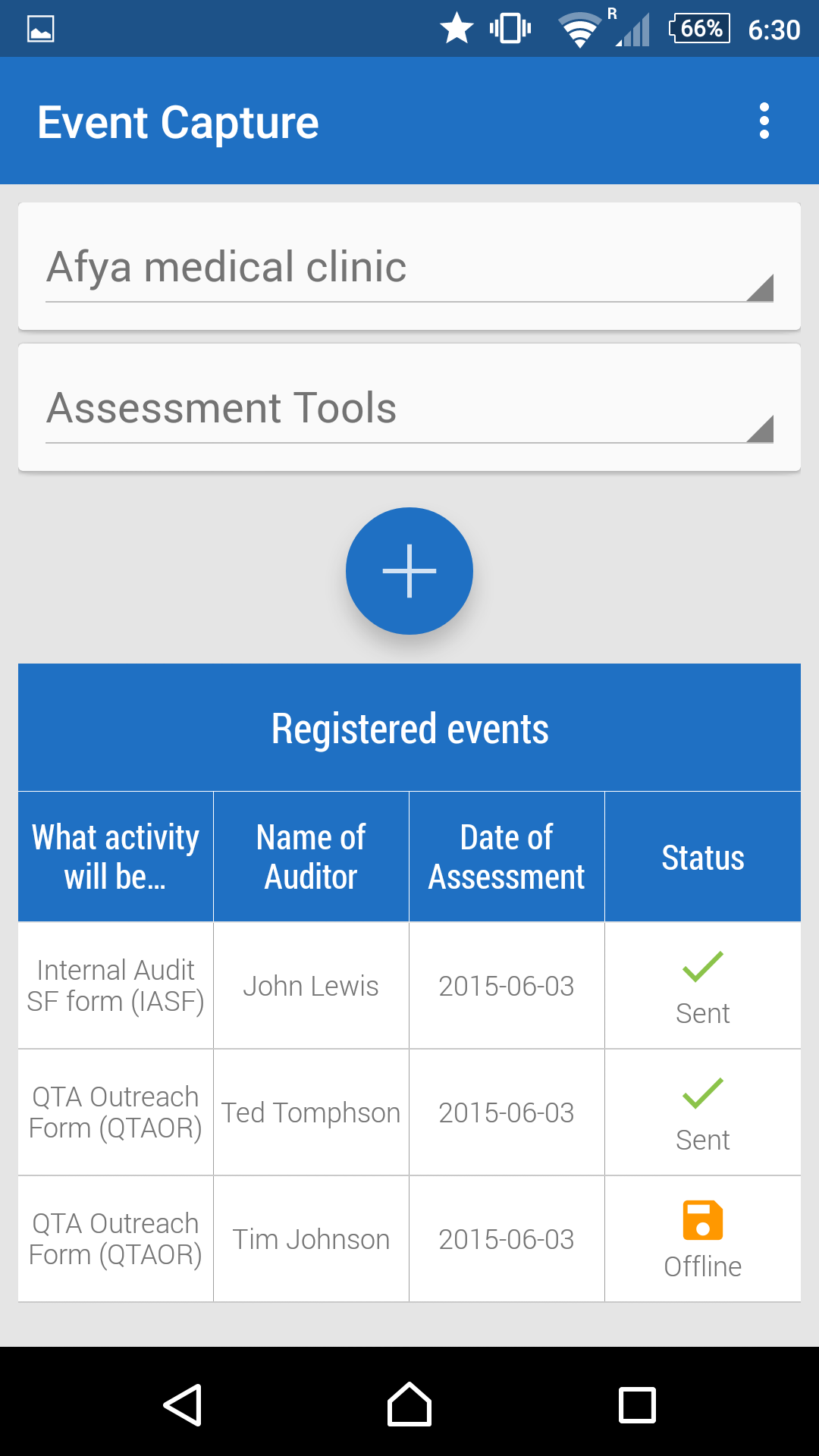
The + button below the selectors will take you to the new event screen. Below this button, all events which have been registered for the selected organisation unit and program will be listed. Each column is configurable, and could show various types of information from each event. The column to the far right shows the synchronization status. Sent means that the event has been uploaded to the server, whereas Offline means that the event is so far only stored at your device. Events will be synchronized automatically once an Internet connection is present. You can swipe down on the screen in order to trigger a synchronization attempt.
Creating events
Click on the + button to go to the new event form. The new event will be associated with the organisation unit and program you selected previously. The new event screen has a range of functions:
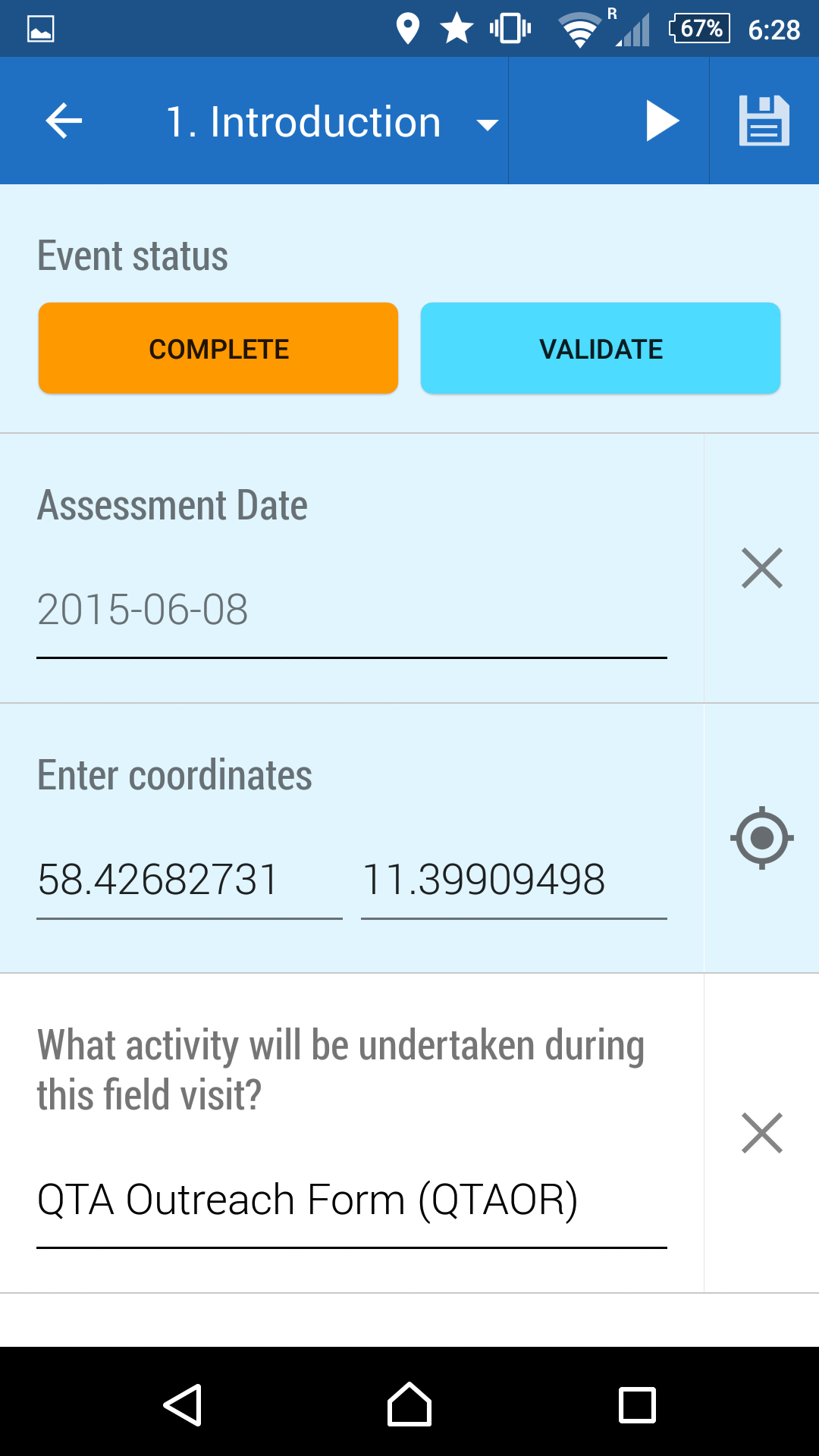
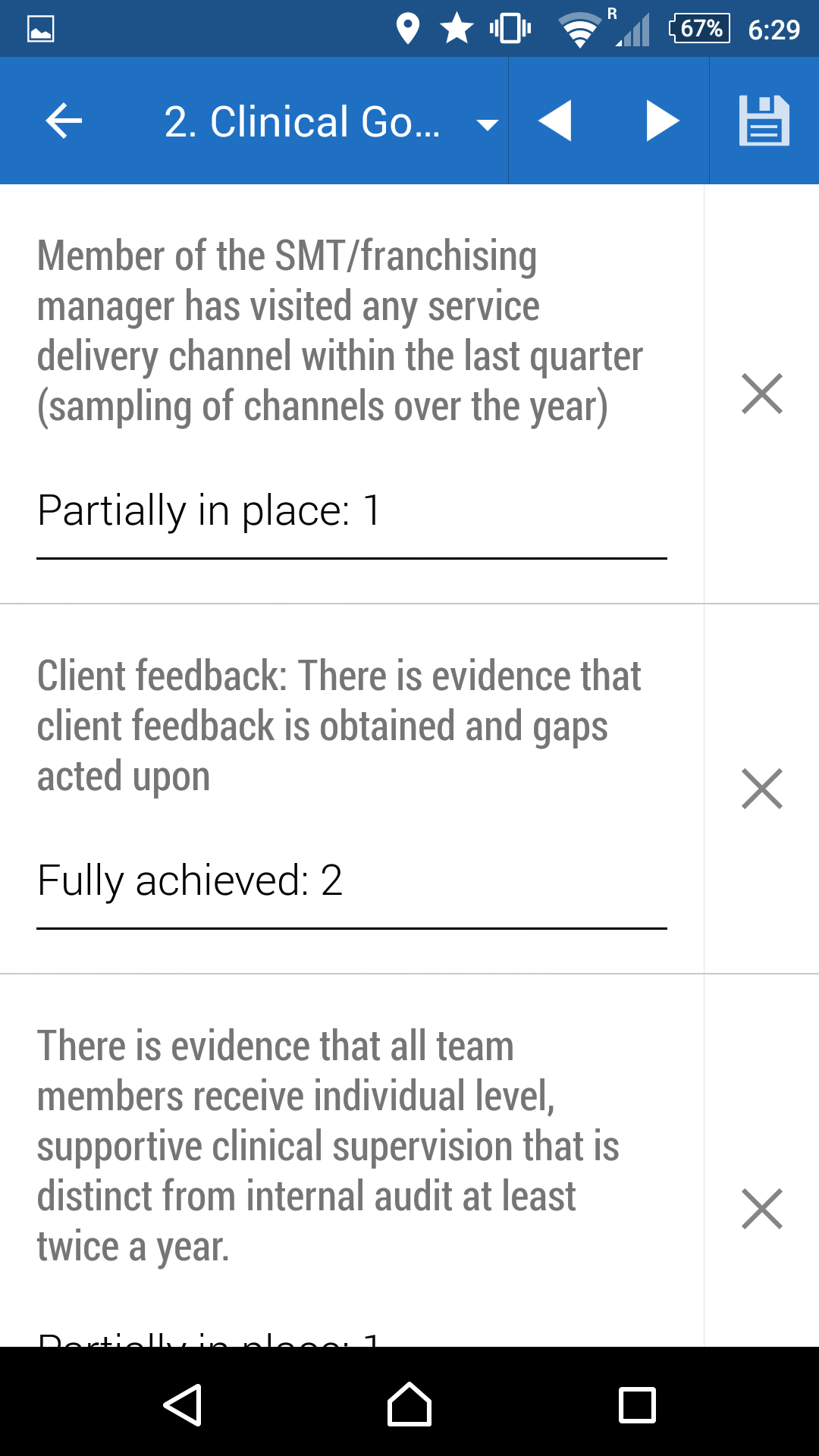
The back button in the top top-left corner will take you back to the main screen (list of events). For programs that have specified sections, these sections will be displayed as a selector at the centre of the top bar. There are also right and left arrows which you can use to move between sections. You can use this selector and arrows to quickly navigate between form sections. The save button in the top-right corner will save what you have entered for the event so far. Data is also saved when you switch between sections.
The Complete button on the second bar will mark the event as complete. The Validate button will trigger a check for validity of the information you have entered based on the validation rules which have been set up for the program.
The first form field contains a date selector and indicators the time of when the event took place. The label is customizable and will vary from system to system. The Enter coordinates field, which will be displayed if the program is configured to store coordinates, lets you use the GPS capability of your device to set the longitude and latitude of your current location by pressing the circle-like symbol to its right. You can alternatively enter the coordinates directly.
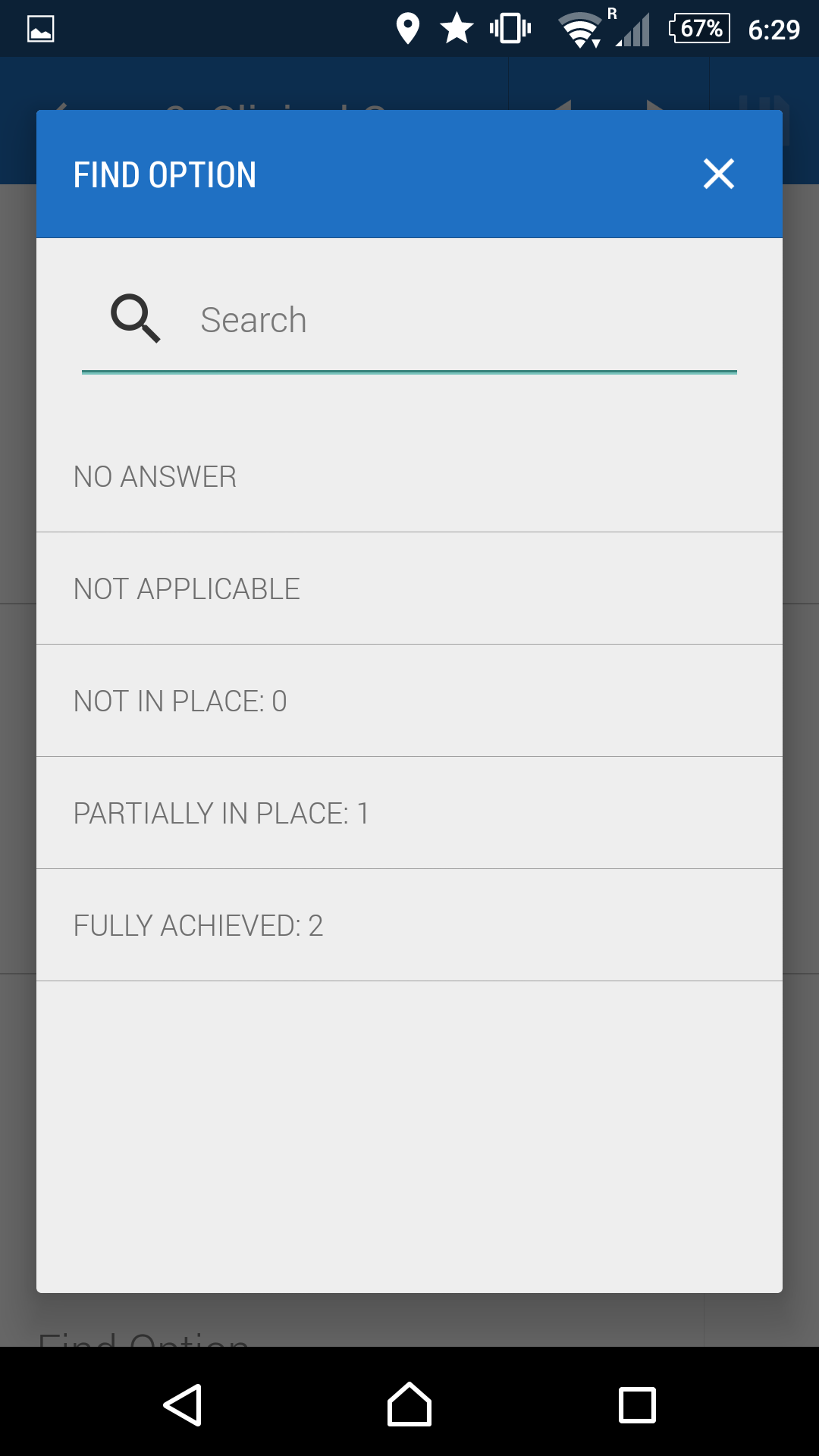
The event entry form itself will be rendered below. The type of input field selector will depend on the type of the data element representing the input field. For example, you will see date selectors, free text input and numeric input fields. Data elements with predefined options will be rendered using a special dialog where you can either click directly on options or use a text input field to search for a specific option (useful if there is a high number of options).
Modifying events
After an event has been created you can go back to or modify the event by simply clicking on it in the event list. This will open the event form pre-populated with information that has been captured so far.
Settings
The settings screen lets you do configure synchronization frequency and log out.
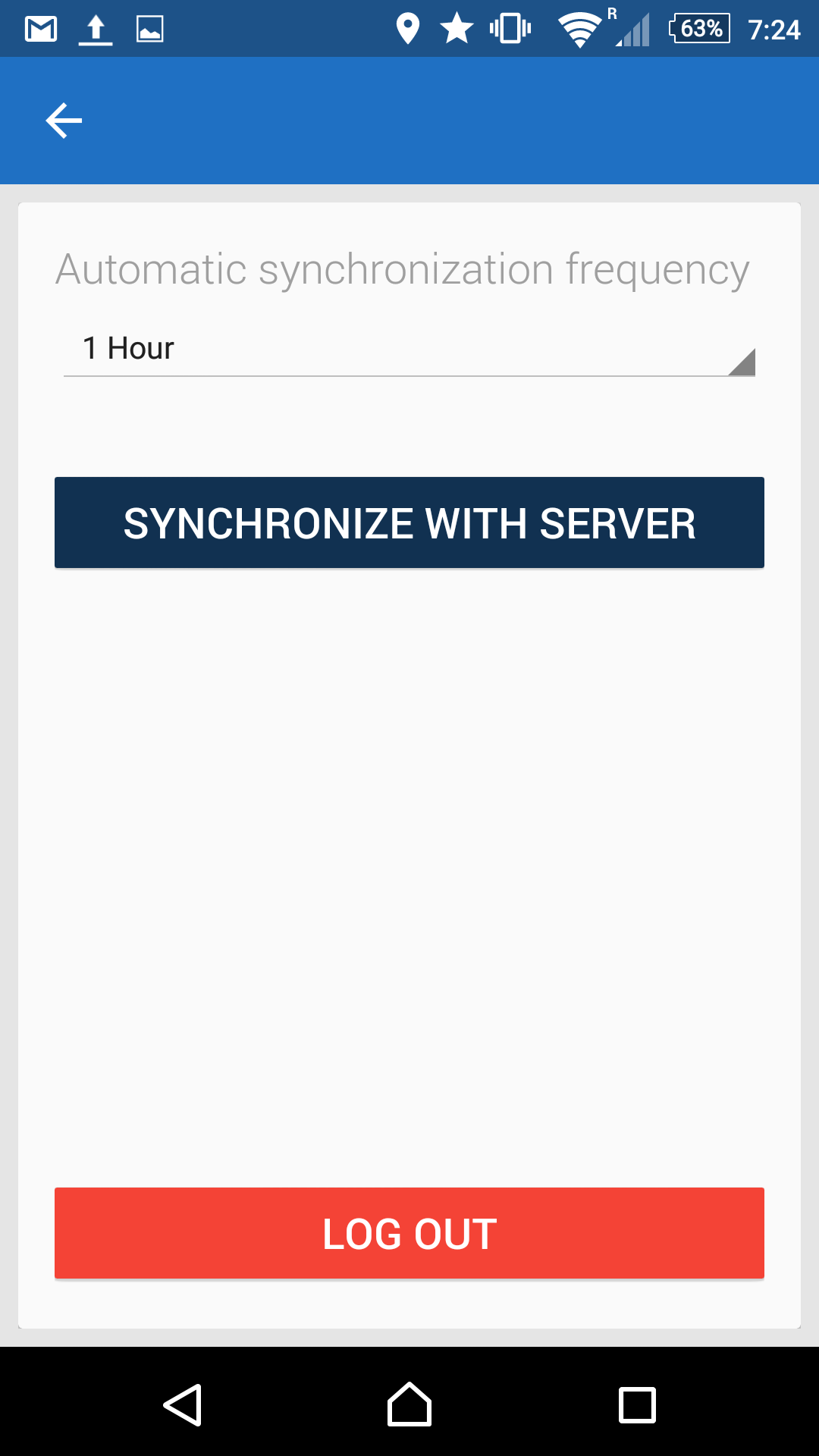
The frequency of automatic synchronization attemps can be set form the drop-down, where options range from one minute to one day. This affects the battery usage and bandwidth consumption. The default of one hour is a sensible choice.
The log out button will log you out of the app, and request you to enter the login information again. You are not intended to log out of the application between each session. This is mostly useful when you want to log into another DHIS2 online instance.